How to make a traditional fish and chips Aussie-style.
Background and Significance
The amalgamation of crispy fish with perfectly fried chips is not just a culinary delight—it carries with it storied cultural exchanges and adaptations. Although rooted in British culinary traditions, fish and chips have been seamlessly integrated into Australian cuisine, becoming a staple at beachside kiosks and urban eateries alike. This dish, emblematic of Australia’s coastal lifestyle, frequently incorporates locally sourced seafood, highlighting the country’s abundant marine resources.
Understanding the Ingredients
The success of Aussie-style fish and chips primarily relies on the selection of quality ingredients. By choosing fresh, white fish varieties such as barramundi, flathead, or snapper, you can ensure a firm texture and mild flavor that complements the batter’s crispiness. Each type of fish offers unique qualities:
Barramundi boasts a buttery taste and delicate flesh, ideal for frying.
Flathead is known for its light, flaky texture which crisps beautifully.
Snapper provides a slightly sweeter flavor profile, adding depth to the dish.
Batter Preparation is another pivotal component. The blend of plain flour with cold sparkling water and salt is essential for crafting a batter that fries to a light, airy consistency. Sparkling water introduces bubbles into the mixture, creating pockets of air that expand during frying, resulting in that irresistible crunch.
The Art of Chip Making
Crafting the perfect chip revolves around selecting the right potato variant. Starchy potatoes like Russet or Sebago are preferred as they yield a fluffy interior and a crunchy exterior when fried. The process of transforming these potatoes into delightful chips includes several key steps:
1. **Precision Cutting:** Uniform slices ensure even cooking.
2. **Parboiling Technique:** By boiling for a brief 5 minutes, the surfaces become tender, setting the stage for outer crisping during the frying process.
3. **Pre-frying Observations:** Initial frying acts as a precursor, allowing internal cooking without browning, thus priming them for a second, crisping stage.
Mastering the Frying Process
Temperature Consistency
The frying process requires careful attention to temperature control. Heating the oil to 180°C is crucial as it guarantees both the fish and chips crisp rapidly while cooking through, minimizing oil absorption, and thus ensuring a less greasy end product.
Step-by-Step Fish Frying
1. **Even Coating:** Thoroughly coat each fish fillet in the chilled batter. The batter’s adherence is key for achieving uniform crispiness.
2. **Immersion and Timing:** Gradual immersion into hot oil prevents the batter from sticking to the fryer. Monitor the cooking process, extracting the fillets when they achieve a golden brown hue, regularly taking about 5-8 minutes.
3. **Oil Draining Procedures:** Using paper towels post-frying helps in absorbing any surplus oil, keeping the crust light and flaky.
Chips’ Golden Finish
1. **Second Fry:** Post-initial frying, a higher temperature of 180°C is reinstated for the chips. This second fry further crisps the exterior while enhancing the rich golden color.
2. **Seasoning Immediately:** As soon as the chips are drained, tossing them in sea salt ensures they absorb the flavors while hot.
Customizing the Dish
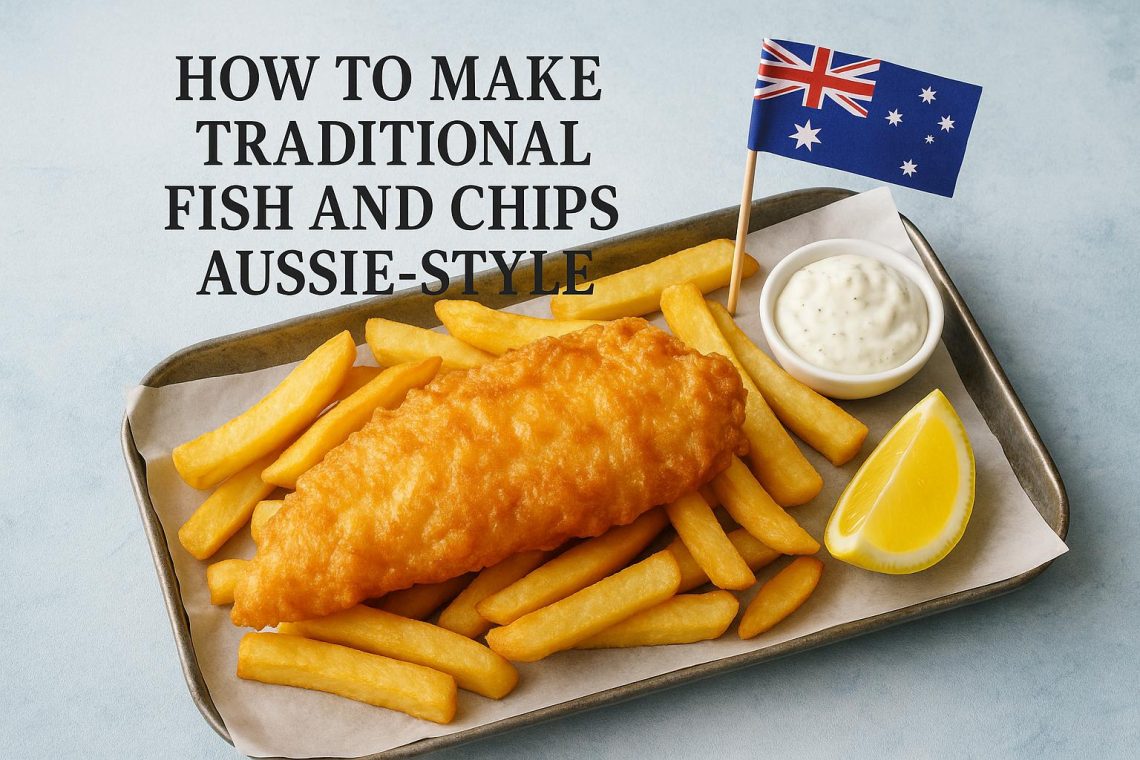
The presentation of fish and chips can be as traditional or modern as desired. For an authentic Australian experience, serve on butcher paper, which adds a rustic charm and simplifies cleanup.
Accompaniments:
– **Tartar Sauce or Aioli:** These provide creamy contrasts to the crunchy textures.
– **Lemon Wedges:** Besides aesthetics, they offer a zesty freshness that brightens the dish’s flavors.
Final Thoughts and Cultural Reflections
The act of making and savoring Aussie-style fish and chips is more than just preparing a meal. It is about channeling the vibrant spirit of Australian beach culture, celebrating the country’s rich fishing heritage, and appreciating the simplicity of classic, heartwarming food. This dish, effortlessly bridging tradition with local twists, invites us to indulge in spontaneous gatherings, reminiscing sunny days spent by the sea.
For those eager to delve deeper into traditional Australian foods, a visit to resources like the Australian Food History Link can be enlightening. As you embark on this culinary journey, remember that the true essence of fish and chips lies not just in the ingredients but also in the joy it brings to the dining table.