
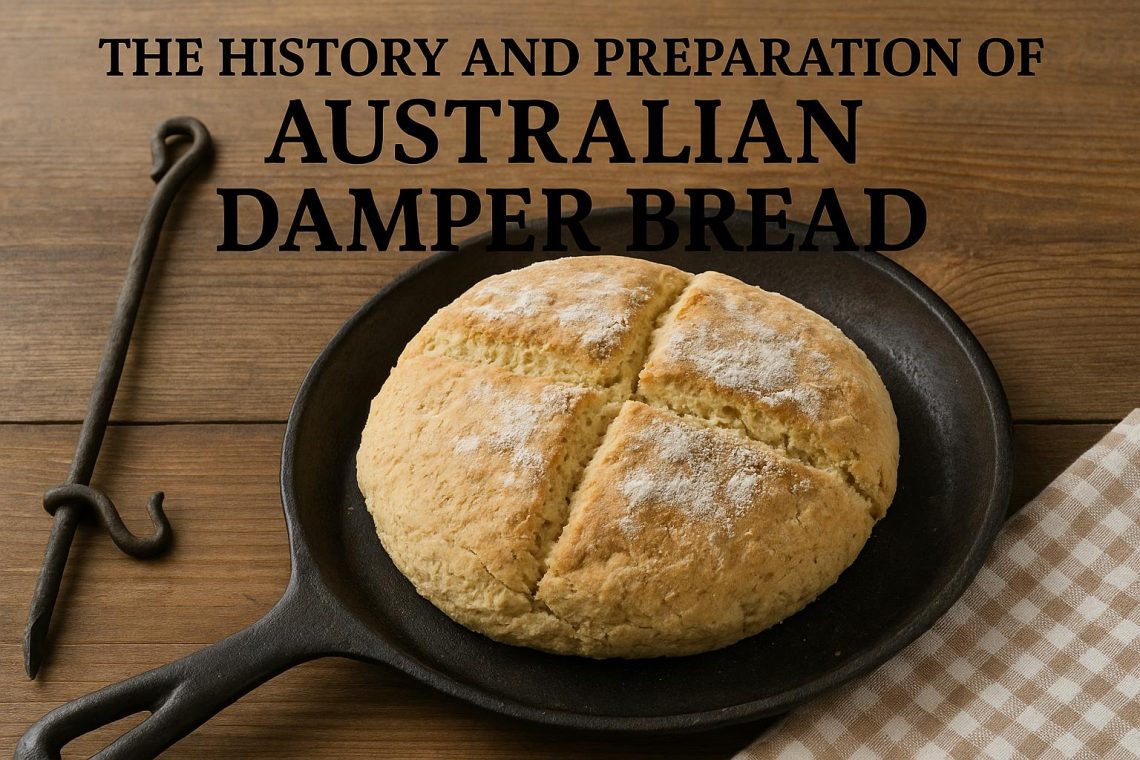
The history and preparation of Australian damper bread.
Damper bread has long been regarded as an integral part of Australian culture, symbolizing the ingenuity and adaptability of early settlers as they navigated the challenges of life in the rugged Australian bush. Its story is not just one of survival; it encapsulates a broader narrative of identity, resourcefulness, and tradition that continues to resonate with Australians and enthusiasts around the world.
The History of Australian Damper Bread
As one of the quintessential foods associated with the Australian bush, damper bread holds a notable place in the heart of the country’s culinary tradition. Originating from the pragmatic needs of early European settlers, it served as a reliable source of nourishment amidst the expansive and often harsh Australian landscape. The history of damper is deeply intertwined with Australia’s past, representing a blend of necessity, innovation, and cultural symbolism.
Origins and Development
The emergence of damper bread dates back to the early 19th century when European settlers were just beginning to establish themselves in Australia. These pioneers faced numerous challenges, not the least of which was securing a stable food supply in an unfamiliar environment. The expansive bushlands of Australia, though rich in natural beauty, lacked the conveniences found in urban centers. This scarcity of resources spurred ingenuity among explorers and workers, driving the creation of foods that were both practical and sustainable.
Damper bread quickly became a staple for bushmen, explorers, and cattle drovers who roamed the outback for long stretches. Its formulation was guided by necessity, utilizing minimal ingredients that were easy to transport and preserve. By cooking the bread over hot coals or nestled into the ashes of a campfire, it acquired a distinctive smoky taste that complemented its simple construction.
Traditional Ingredients and Method
The fundamental ingredients for traditional damper were straightforward: flour, water, and occasionally salt. In circumstances where self-raising flour was accessible, it would be employed to give the bread a slight lift. On rarer occasions, when supplies allowed, milk or butter might be incorporated to enrich the flavor and texture of the bread.
Creating a loaf of damper was a process marked by simplicity. The initial step involved combining the dry ingredients. Water was then gradually introduced, mixed until a cohesive dough was achieved. This dough required only light kneading before being formed into a circular loaf. Cooking methods varied; however, the use of a preheated camp oven or direct placement into hot ashes was customary, embracing the rustic cooking styles of the bush.
Modern-Day Variations
The adaptability of damper has ensured its survival into contemporary times, where it continues to be a beloved food item with evolving tastes and preferences. Today’s versions of damper incorporate a myriad of additional ingredients that reflect both personal creativity and the diverse palate of modern cuisine. Cheese, herbs, spices, and a variety of flavorings have found their way into the traditional recipe, often transforming it from its original plain form into a dish of gastronomic flair.
The popularity of damper has breached the boundaries of the bush and the rural landscape; it is now embraced in urban environments as well. This expansion demonstrates its lasting appeal and the versatility it has acquired over the years. While formerly prepared in open-air settings, damper is now frequently baked in conventional ovens, removing the need to venture into the wilderness to enjoy its taste.
Preserving Tradition in Contemporary Times
The persistence and prominence of damper bread in Australian cuisine can be attributed to more than just its adaptability; it is a reflection of cultural heritage, resilience, and self-reliance that Australians hold dear. As communities gather to celebrate this aspect of their history during cultural events and festivals, damper acts as a reminder of the fortitude and resourcefulness characteristic of Australia’s early settlers and all those who followed.
Besides its culinary significance, damper holds an educational value by fostering appreciation and understanding of Australia’s storied past. In a rapidly globalizing world, maintaining traditions such as these aids in preserving unique identities and histories for future generations.
Understanding damper bread offers insight into a way of life that was forged under the demanding conditions of outback living. Though its development was born of necessity, the methods and meanings attached to it have transcended those origins, evolving into a cherished representation of Australian cultural identity.
For those who are eager to delve deeper into Australia’s diverse culinary history and explore similar traditional foods, there is a wealth of resources available. Many history-focused websites provide expansive views of the country’s rich and varied past, narrated through the lens of food and everyday life. One such starting point is a reliable history website, which provides opportunities to further explore the chronology and significance of traditional Australian fare.