How to create a classic Aussie pavlova.
Understanding Pavlova
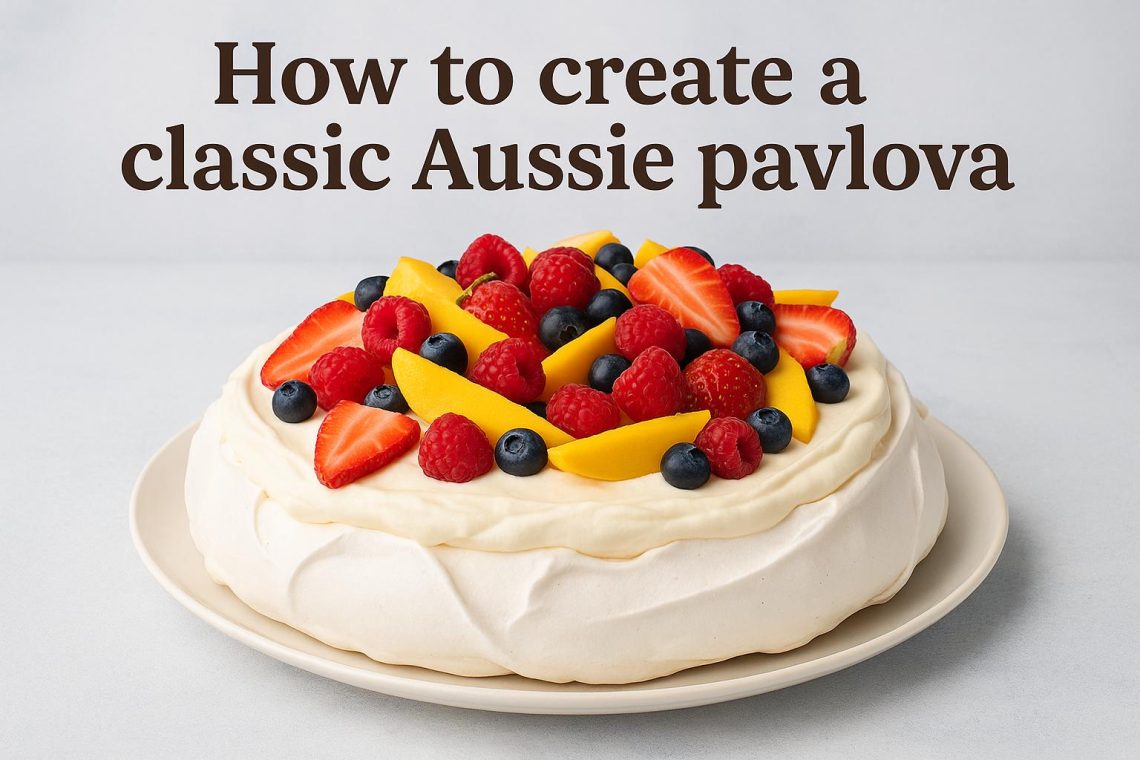
The classic Aussie pavlova is an iconic dessert that finds its roots in a delightful fusion of culinary skill and artful presentation. Named after the renowned Russian ballerina Anna Pavlova, this dessert is a testament to its namesake’s elegance and grace. The pavlova is characterized by a meringue base that is exquisitely crisp on its exterior, cradling a velvety soft interior. Traditionally, it is adorned with a colorful array of fresh fruits and a generous dollop of whipped cream, making it both a visual and gastronomic feast.
Ingredients
Central to the craft of pavlova are its simple yet precise ingredients. The foundation of this dessert lies in the quality and combination of:
- Egg whites: At the heart of pavlova, egg whites must be fresh and at room temperature to whip to their fullest potential.
- Caster sugar: This fine sugar is pivotal in imparting sweetness and contributing to the meringue’s structure.
- Cornflour: A stabilizer that maintains the meringue’s integrity and prevents it from weeping.
- Vinegar or lemon juice: A small amount is crucial for enhancing the meringue’s aeration and stability.
- Vanilla extract: Adds a subtle depth of flavor, enriching the dessert’s overall taste profile.
Additional Toppings
The artistic flair of a pavlova comes alive with its additional toppings. While optional, these elements complete the creation:
– A medley of seasonal fruits such as strawberries, kiwifruit, and passionfruit not only adds vibrancy but also balances the sweetness with their natural tartness.
– Whipped cream serves as a decadent layer that complements the meringue’s texture.
Preparing the Meringue Base
The expertise involved in creating a pavlova is significantly reflected in the meringue. Mastery here can transform the dessert from ordinary to extraordinary. The baking process begins with preheating your oven to 150°C (300°F).
Whisking the Egg Whites
In a spotless, completely dry bowl, start by whisking egg whites to form soft peaks. It’s imperative to avoid any contamination from yolk or fat, as this can prevent the whites from achieving their necessary volume.
Incorporating Caster Sugar
With the mixer running, gradually introduce caster sugar, one tablespoon at a time. This slow addition is vital for ensuring the sugar dissolves fully into the egg whites, producing a meringue that is glossy and robust. The goal is a thick, shiny mixture with stiff peaks.
Addition of Cornflour and Vinegar
Gently fold in cornflour and your choice of vinegar or lemon juice. These ingredients are not only integral for adding subtle tang but are essential in stabilizing the meringue. The inclusion of vanilla extract at this stage offers a fragrant aroma that permeates throughout the dessert.
Shaping and Baking
Prepare your baking setup by lining a tray with parchment paper. Carefully spoon the meringue onto the tray, skillfully shaping it into a circle. Create a slight indentation at the center, which will accommodate your toppings later.
**Baking**: For best results, place the meringue in the oven and promptly lower the temperature to 120°C (250°F). Allow it to bake undisturbed for approximately an hour. To maximize the meringue’s stability, switch off the oven and let the pavlova cool within. This step is crucial to prevent cracking and preserve the dessert’s structural integrity.
Assembling the Pavlova
Once your meringue has cooled thoroughly, your pavlova is ready for assembly.
Cream Layer
Begin by whipping cream until it peaks firmly, yet is still luscious and smooth. Spread this cream generously over the meringue, allowing it to fill the central well and extend towards the edges.
Fruit Toppings
Choose from a selection of your preferred fresh fruits. Arrange them over the layer of cream in a visually appealing manner. Classics such as sliced kiwifruit, strawberries, and even passionfruit pulp not only add to the taste but also provide a vibrant visual appeal, making the dessert appealing to both the eyes and the palate.
Tips for Success
Achieving the quintessential pavlova requires attention to detail:
– Ensure all equipment and ingredients, particularly the egg whites, are at room temperature. This step is key in achieving the best volume and texture.
– Be mindful of weather conditions, particularly humidity, which can impede the meringue’s ability to dry properly and maintain its structure.
For further exploration into the art of making pavlova, numerous recipes and expert tips can be found on culinary websites like [Taste](https://www.taste.com.au/), which offer a wealth of resources to refine your skills.
Conclusion
To craft a quintessential classic Aussie pavlova is to engage in a delicate balance of precision and creativity. By mastering the meringue base and thoughtfully selecting toppings, this dessert becomes a symbol of culinary achievement and festive delight. Each step is an opportunity to infuse your unique touch, ensuring the pavlova you create is not just a dish, but a culinary experience remembered by all who savor it.